

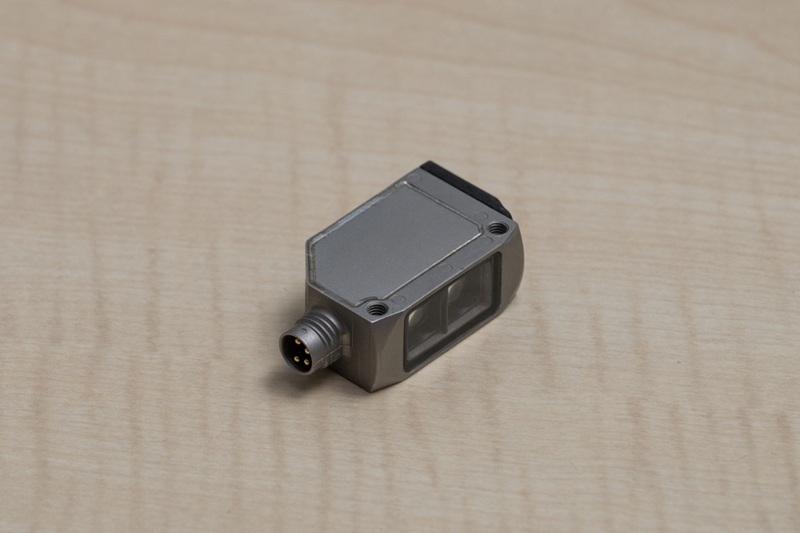
Data is everywhere now, but not all data is equal. Some of it comes straight from physical things—machines, bodies, weather, roads. That’s where sensors step in. They sit quietly, collect signals, push numbers out. Often unnoticed, yet everything depends on them. From phones to factories, they run in the background. Raw, fast, sometimes messy.
People talk about AI, automation, and smart cities—but none of it works without these small input points. Sensors feed the system. No input, no intelligence. Simple.
In this blog, we'll discuss what sensor data is, its types, examples, and the uses of sensors.
Sensor data is the information a device collects when conditions change. For example, the sensor data can help measure a storm's decrease in air pressure, or temperature increase, as well as the outcome of a light bulb being turned on, and/or client-generated sound.
If you can quantify the measurable condition, there is probably a sensor that will help you to do so.
A sensor picks up a physical signal. Converts it. Sends it forward. That’s it, at a high level. But inside, it’s more layered:
And sometimes, it stops right there. Other times, it triggers actions instantly—like alarms, braking systems, or medical alerts. Short loop. Big impact.
Also Read: The Impact of 5G on Cybersecurity: Opportunities & Threats
Sensors come in many forms. Some are simple, others are complex. The classification usually depends on what they measure or how they behave.
Sensors come in all shapes and sizes. Temperature sensors check how hot or cold things are. Pressure sensors watch for how much force is being applied. Motion sensors? They catch any movement or just notice if something’s there.
Light sensors pay attention to how bright or dark it gets, while humidity sensors figure out how much moisture is floating around in the air. Simple — each type sticks to its own job. No mix-ups.
Sensors also differ in how they send data:
Analog feels more real. Digital feels more usable.
Sensors aren’t all the same. Some work in factories, keeping machines running smoothly. Others track your health in hospitals. There are sensors out in the wild, monitoring weather and climate. And you’ll find plenty inside cars, too.
The basic idea doesn’t change—just the setting. Sometimes, they cross over. A temperature sensor inside a car still measures heat, but it’s made for auto conditions instead.
It’s easier to understand sensor data when you see it in action. Real outputs, real use.
You're already using sensor data:
You don't think about it. It just works.
Factories rely heavily on sensor data:
One small reading can stop a big accident.
Sensors also watch the world:
Data here isn’t instant action, always, but long-term decisions.
Medical systems depend on accuracy:
Small error, big consequence. So these sensors are built more tightly and tested more.
Don't Miss: The Growing Importance of Zero Trust Architecture Trends
Sensors don’t just collect data—they enable action. That’s where things get interesting.
Homes are getting automated. Slowly, unevenly, but clearly.
Convenience, yes. Also, energy savings.
Health monitoring’s changing fast—fewer hospital visits, more constant tracking.
People wear wearables for everything: steps, sleep, heart rate. Remote monitoring systems tell doctors right away when something’s off. Sensors catch early warning signs before anything gets serious.
Factories are in the same boat. Sensors are everywhere now—there’s no way around it.
They predict when machines need fixing, so things don’t just break down. Everything is tracked in real-time. Autonomous systems respond as soon as things happen.
In autos, sensors are essential.
And autonomous vehicles? Fully sensor-driven.
Farming isn’t just manual anymore.
Old industry, new methods.
Sensor technology keeps evolving. Faster, smaller, cheaper. Also, more connected.
Lately, sensor tech has gotten a lot smaller — some of these things are practically invisible now. They're wireless too, so setting them up is way easier, no more messy cords everywhere.
Battery life keeps getting better, so you don't have to worry about charging all the time. And the readings? Much more accurate, thanks to better calibration and way less noise.
It’s not all smooth.
Sensors create data. Managing it is the harder part.
Suggested Reading: The Role of AI in Cybersecurity: Smarter Threat Protection
Sensor data sits quietly at the base of modern systems. It doesn’t look impressive—just numbers, signals, streams. Yet everything above it depends on accuracy at this level. A bad reading can break a chain; a good one keeps systems stable.
From homes to hospitals, farms to factories, sensors feed decisions constantly. Some data is used instantly, some is stored for later patterns. The scale keeps growing. More devices, more data points, more dependency.
Sensor data is usually stored in databases or cloud systems. Large setups use real-time data pipelines. Storage depends on volume—small systems store locally, large ones use distributed storage. Data cleaning often happens before analysis.
Sensor data is a source; big data is a scale. Sensor data can become big data when collected in large volumes over time. Not all sensor data is big, but it often contributes to big data systems.
Sensor data isn’t always spot-on. Sensors can drift, run into weird environmental issues, or just wear out as time goes on. Even with calibration, mistakes slip through. Most systems try to catch these errors with filters or checks, but nothing’s perfect.
As far as security, it varies. Cheap sensors are hardly protected, whereas the top-notch sensors use encryption and secure networks. There’s always a chance someone could mess with the data—intercept it or tweak it.
This content was created by AI